The Marketing Cargo Cult: Why Hiring a "Social Media Manager" Won't Fix Your Growth Problem
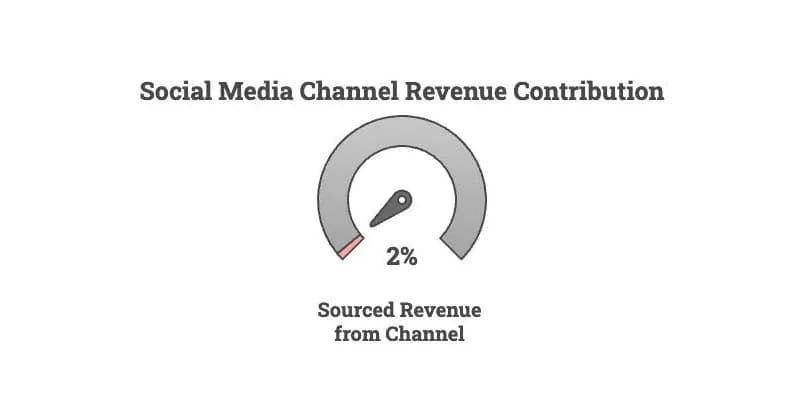
I worked with a B2B firm recently in a similar position — one overextended in-house hire pushing out 8–12 posts a week, sophisticated creative, zero pipeline attribution.
The channel was responsible for under 2% of sourced revenue.
Not a content quality problem.
A system problem.
What changed: they stopped trying to fix the hire and started fixing the architecture.
They brought in a fractional CMO — not to manage the generalist, but to do something that had never been done: define the positioning clearly, map the actual buyer journey for their enterprise segment, build content-to-conversion loops, and connect social touchpoints to the CRM so attribution was finally trackable.
Only after that foundation existed did they expand execution.
Instead of a second internal hire, they worked with an external production team — senior copywriters, a video editor, an ads specialist — all coordinated under the same strategic framework.
The output went up.
The relevance of the output went up more.
And for the first time, organic content started contributing meaningfully to pipeline — not because they posted more, but because posting was finally connected to something.
The point isn't that in-house marketing is bad or that headcount is wrong.
The point is sequencing.
Strategy before execution.
Architecture before activity.
If you're considering another content hire and you don't yet have someone who owns the conversion logic end-to-end, you're about to make the same expensive mistake again — just with a different person's name on the org chart.
The cargo cult problem
There's a pattern I keep seeing in B2B companies that have figured out product-market fit but haven't figured out distribution.
They watch what visible, successful brands do — the daily LinkedIn posts, the short-form video on YouTube, the branded design system — and they replicate the surface.
The motion without the mechanism.
Founders don't do this because they're lazy.
They do it because it quiets a specific kind of anxiety.
When there's a person posting content from the company account, it feels like marketing is happening.
The slot on the org chart is filled.
The Slack channel has someone in it.
The discomfort of "we're not doing marketing" gets muffled.
What nobody says directly: presence isn't a strategy.
A loyal, well-meaning generalist cannot architect a B2B revenue funnel, not because they lack intelligence, but because B2B distribution is genuinely a multi-discipline system.
You need positioning expertise, conversion copywriting, visual production, paid media execution, and analytics — each of which is a real craft.
Packing that expectation into one hire isn't ambitious, it's evasive.
You're hoping the problem solves itself if you put a body near it.
What the generalist actually optimizes for
Here's what happens when you put a solo content hire into an org with no marketing leadership above them: they optimize for what they can control and measure easily.
Post frequency.
Creative quality.
Follower growth.
Comments.
Not because they're wrong to, but because those are the only levers they actually own.
The things that convert — lead capture architecture, retargeting sequences, CRM integration, bottom-of-funnel content mapped to sales conversations — require cross-functional authority they don't have and infrastructure that probably doesn't exist yet.
So the content sits on an island.
It gets seen, sometimes appreciated, occasionally shared.
And then it disappears into the feed, unconnected to anything that moves revenue.
Meanwhile the founder looks at the dashboard, sees impressions trending up, and convinces themselves momentum is building.
It isn't.
The competitor who quietly built a demand gen loop six months ago is getting the demo requests you should be getting.
What actually works
I worked with a B2B firm recently in a similar situation — one overextended in-house hire pushing out 8–12 posts a week, sophisticated creative, zero pipeline attribution.
The channel was responsible for under 2% of sourced revenue.
Not a content quality problem.
A system problem.
What changed: they stopped trying to fix the hire and started fixing the architecture.
They brought in a fractional CMO — not to manage the generalist, but to do something that had never been done: define the positioning clearly, map the actual buyer journey for their enterprise segment, build content-to-conversion loops, and connect social touchpoints to the CRM so attribution was finally trackable.
Only after that foundation existed did they expand execution.
Instead of a second internal hire, they worked with an external production team — senior copywriters, a video editor, an ads specialist — all coordinated under the same strategic framework.
The output went up.
The relevance of the output went up more.
And for the first time, organic content started contributing meaningfully to pipeline — not because they posted more, but because posting was finally connected to something.
The point isn't that in-house marketing is bad or that headcount is wrong.
The point is sequencing.
Strategy before execution.
Architecture before activity.
If you're considering another content hire and you don't yet have someone who owns the conversion logic end-to-end, you're about to make the same expensive mistake again — just with a different person's name on the org chart.